
The online education market is growing at a rapid pace, with expectations to surpass 1 billion users over the next five years. However, while this growth indicates tons of potential for schools and platforms looking to enter the digital landscape, it also reveals a potential challenge. As in any industry, an uptick in demand automatically means working against more competition.
To position and grow your school or educational platform, you need effective digital marketing tactics that yield proven results.
One method of developing a successful and scalable marketing tactic is, of course, to take inspiration from businesses whose structure aligns with your own. In this vein, learning from B2B brands could be a good choice.
For starters, educational businesses and B2B brands deal with similarly long sales cycles. Both need to build credibility and relationships to convert customers. Plus, both sectors target prospects with an equally strict focus on ROI. Ultimately, success in both industries depends directly on customer retention rates.
Taking this into consideration, it’s no surprise that the types of marketing tactics that align with these goals also match. In other words, B2B digital marketing can serve as an excellent guiding point for developing a plan of action for promoting your offer in the online education market.
Without further ado, these are the eight digital marketing tactics schools and education platforms can learn from B2B brands, along with tips on how to use and make them work for your business. Let’s get into it.
Create Segment-Specific Landing Pages That Speak to Different Types of Learners
One of the first rules of developing a successful marketing strategy — regardless of your industry or niche — is having an in-depth understanding of your target audience.
At the end of the day, the only way to convert clients is to address your potential customers’ pain points and show your ability to remove them. That largely depends on proving you understand their unique needs and expectations, as well as demonstrating your track record of addressing similar issues in the past.
However, the issue with operating in the digital education market is that you’re more than likely to have several customer personas or even deal with sales processes that involve multiple decision-makers.
When running a school or online learning platform, you might be targeting parents, students, adult learners, teachers, school administrators, or even corporate buyers purchasing learning and development solutions for their employees. Successfully engaging any of these personas necessitates different approaches, as each group will have unique motivations, concerns, and even use different language.
The good news is that this type of marketing complication isn’t unique in the digital landscape. B2B companies often deal with similar challenges, and they’re exceptionally effective at overcoming them.
One simple tactic that can help you tackle this issue is to create segment-specific landing pages that speak to different types of learners/customers.
Ultimately, this type of audience segmentation isn’t just a way to shorten your sales cycle by ensuring each persona receives the marketing message most suited to their needs. It also helps your potential customers comprehend that you genuinely have what they need — even if you target a versatile customer base.
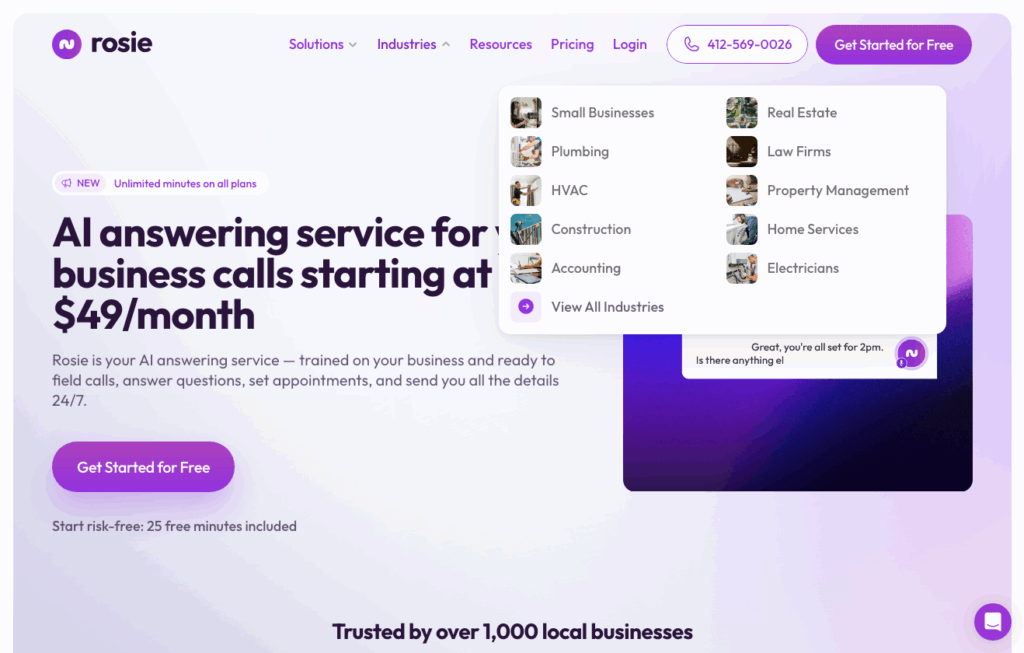
For an excellent example of how a B2B brand does this, check out Rosie. The AI-powered answering service is a solution that appeals to several industries, which is why the brand created landing pages for each of these customer segments. By taking the time to address the benefits the solution offers to small businesses, law firms, real estate agencies, etc., Hey Rosie creates an opportunity to present web visitors with hyper-relevant marketing messages that are much more likely to resonate than generic copy promising vague benefits.
Source: heyrosie.com
When adopting this tactic into your digital marketing strategy, start by identifying your primary customer personas. Then create landing pages to address each of their unique and most pressing needs:
- For parents, focus on reassurance about outcomes and safety.
- For your adult learners, point out the career ROI you can offer.
- For teachers, draw attention to integration and standard compliance.
Create Lead Magnets That Actually Qualify Prospects
Considering the importance of audience segmentation in determining the success potential of your digital marketing tactics, one of the best strategies you can adopt is to start the qualifying process as early in the sales cycle as possible.
Ultimately, nothing undermines a marketing campaign more than irrelevant messaging. Just look at some of the latest research. You’ll find that 81% of people actively ignore brand messages that aren’t relevant to their needs, while personalization, in turn, drives both conversions and loyalty.
In the B2B sector, brands often meet consumer demand for personalization by starting the qualifying process earlier in the sales cycle. By investing in lead magnets that also act as customer segmentation tools, companies attract primarily buyers who are genuinely interested in converting. More importantly, they instantly segment prospects based on their needs, allowing them to tailor further communications for maximum conversion potential.
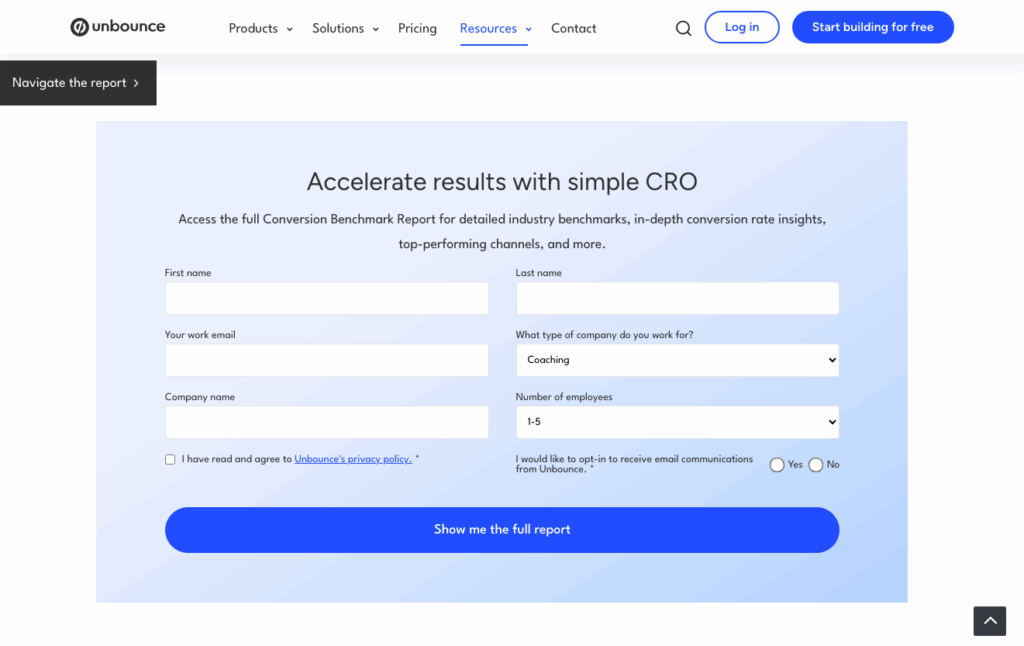
Gated resources and tools — like the Conversion Benchmark Report from Unbounce below — often create valuable opportunities to learn more about new leads. For instance, the screenshot below shows a download form that includes questions pertaining to the lead’s workplace and number of employees, which automatically allows Unbounce’s sales and marketing teams to tailor future communications to maximize success.
Source: unbounce.com
When implementing this tactic in the online education market, invest in lead magnets that focus on intent segmentation.
Curriculum previews, trial modules, and webinars can all indicate a high buying readiness while helping you collect relevant data regarding prospects’ needs. However, even top-of-funnel resources, such as white papers or checklists, can help you explore leads’ needs and interests, thus giving you a valuable opportunity to tailor your marketing campaigns to align with those needs.
Treat LinkedIn Like a Trust-Building Channel, Not Just a Noticeboard
Social media plays an irreplaceable role in the sales cycle — yes, even in professional circles.
If you look at LinkedIn’s research, you’ll discover that 75% of B2B buyers use social media to inform their purchase decisions. However, despite marketers often using these platforms as marketing and sales channels, a much more effective way to employ them is to build trust.
Education — just like B2B solutions and services — relies on credibility and competence. Yet, trust in educational institutions is at an all-time low, with nearly 50% of public school teachers feeling that most Americans don’t trust them much or at all.
So, when looking to attract (and convert) customers in the education sector, you need to explore ways to build credibility.
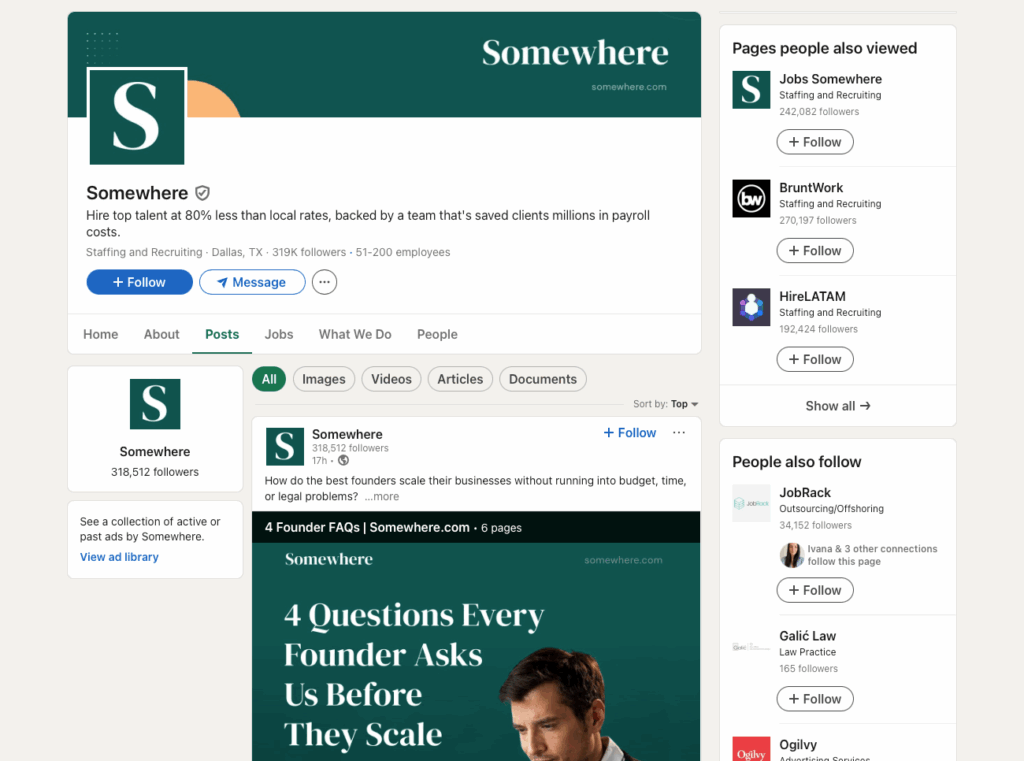
LinkedIn can make this at least partially easier, as it offers several opportunities to establish your trustworthiness. B2B brands like Somewhere effectively utilize the platform to establish an online presence in a space that is relevant to their target audience. But take a closer look. You’ll also notice that this brand has a polished company page, publishes relevant, user-centric content, and highlights instances of social proof that testify to the organization’s trustworthiness.
Source: linkedin.com
To make this tactic work for your brand, do the following:
- Focus on relevant topics, social proof, and your team’s expertise.
- Distribute relevant, unique, and valuable content that your target audience will gain from.
- Highlight real-life outcomes (whether from students or educators who use your solutions).
- Don’t be afraid to share your expert team’s unique insights, as it can be a great way to position your business as a thought leader in an otherwise saturated industry.
Use Social Proof Video That Feels Real, Not Scripted
Very few content formats work as effectively as social proof — at least when it comes to building credibility. But the issue with customer feedback is that it’s not always trustworthy enough to make a significant impact on your business outcomes.
Although nearly all people consult social proof before investing in a product or service — research from PowerReviews suggests that 99.75% of consumers do so at least sometimes — not all social proof formats are equally trustworthy.
Data from January 2024 reveals that 75% of consumers are concerned about fake reviews, and 39% of them say they trust this social proof format less than they did five years ago.
The solution to overcoming these conversion obstacles lies in authenticity.
Authenticity in promotional content is something that most buyers seek. Plus, surveys repeatedly show that user-generated content — especially when delivered in an unfiltered, approachable, and engaging manner— significantly outperforms traditional social proof.
B2B brands often win trust with short, authentic testimonial videos that speak directly to buyer concerns. Because these resources feel real instead of scripted — like in the example from Vidpros, stating that “[their] clients rave about [their] video editing services” — they do a fantastic job of establishing credibility and trustworthiness without sacrificing authenticity.
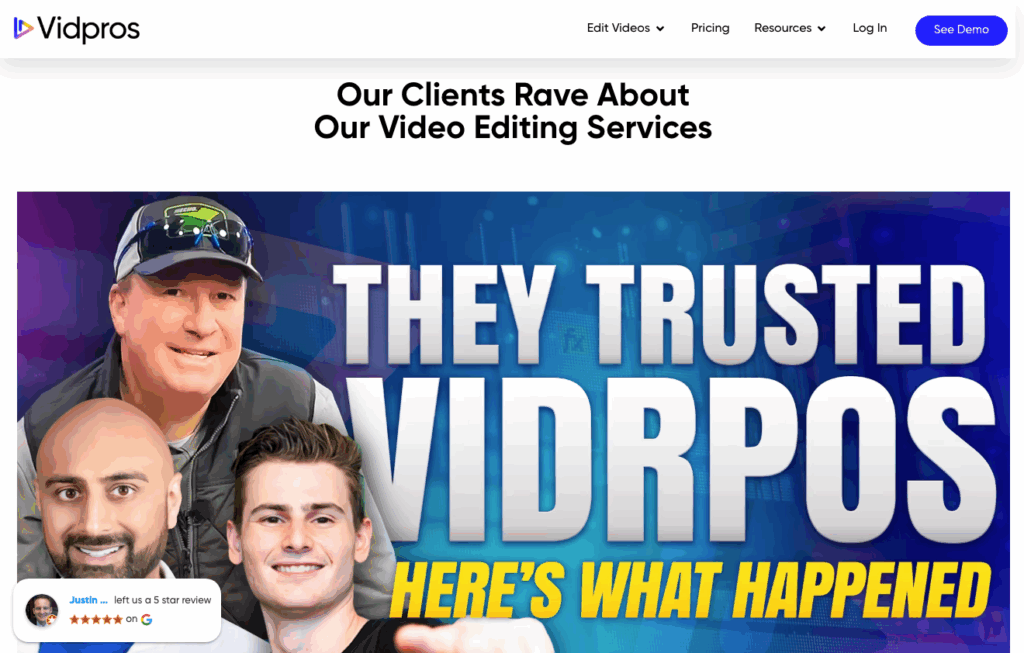
Source: vidpros.com
In the educational sector, a similar approach can be equally effective.
Instead of utilizing polished or generic praise, focus on showing real users (students, teachers, parents) describing real-life outcomes.
A parent talking about their child’s newfound confidence, an adult learner describing how they qualified for a new job, or a teacher sharing the impact a course made on their classroom are all great ways to support and back your value propositions in a way that feels organic and unforced.
Use Case Studies as Bottom-of-Funnel Sales Tools
Case studies are another social proof format that B2B brands commonly use, which you can easily adopt when marketing your school, platform, course, or tutoring services.
This format works at the bottom stages of the sales funnel because it accomplishes two significant goals. On the one hand, case studies present prospects with real-life, measurable evidence of the effectiveness of your offer. On the other hand, they validate customers’ buying decisions by providing them with insights into the customer experience your business delivers.
If you check out Social Plug, you’ll notice that it includes insightful client case studies (like this Instagram case study) in its content strategy. These resources start by describing customer struggles. Then, they outline the steps the brand took to remove those pain points. Finally, Social Plug summarizes the outcomes it delivers, with a strong focus on specific pain points it removed or minimized through its services.
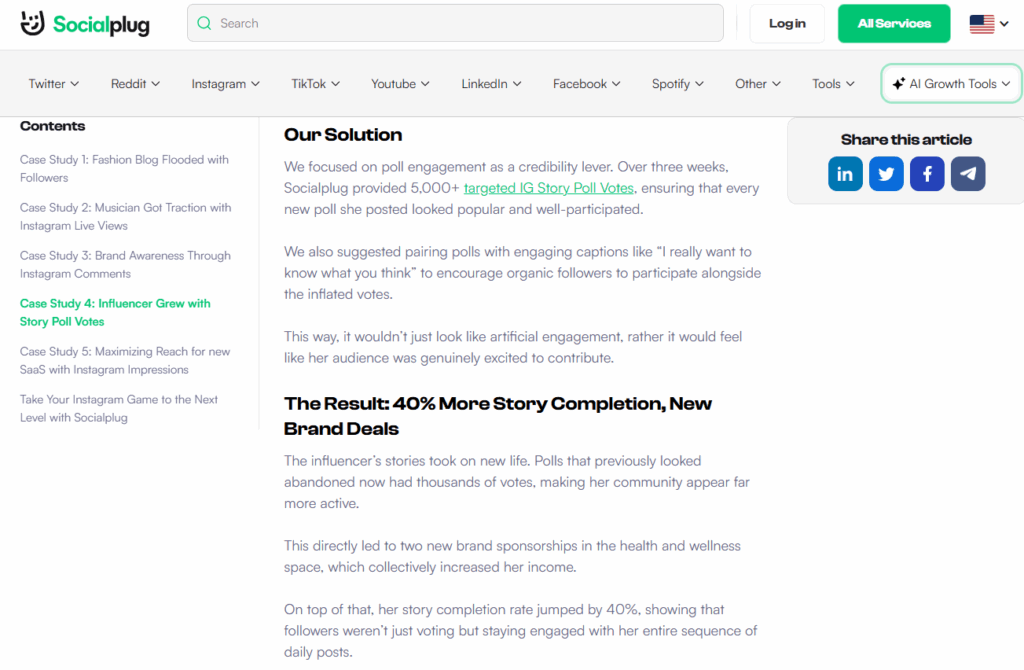
Source: Socialplug.io
In the education sector, you can adopt a similar approach — especially by turning learner outcomes into stories that can close the gap between interest and conversions.
A good rule of thumb is to focus on learner or customer results. Describe the process of implementing your service or product and focus on achieving authenticity, which you can do either by showcasing direct quotes or by backing up your claims with measurable data.
Turn Common Objections and Hesitations Into Content
No matter how targeted and personalized, even the best marketing strategies can’t convert all prospects into customers. Most shoppers have some conversion obstacles that prevent them from clicking your CTA buttons.
In fact, research from the above-mentioned Conversion Benchmark Report by Unbounce suggests that the median conversion rate for education businesses is 8.4%. Even though this is above the average CR for all industries, the data still suggests that over 90% of your leads might never become customers.
The reason for this is simple. Projects studying cart abandonment rates have effectively identified common objections and conversion killers, including low customer experience expectations, lack of trust, complex checkout processes, or unclear value propositions.
One of the digital marketing tactics B2B brands employ to overcome these hesitations is to invest in content that addresses the exact questions stalling their conversion rates.
Start in Wyoming, for instance, centers its blog content strategy around frequently asked questions and potential objections in its niche, aiming to clarify common misconceptions and elevate product understanding. The method works, and not just because it removes hesitations. This type of content builds trust, shortens the sales cycle, and boosts conversions without coming across as aggressively sales-oriented.
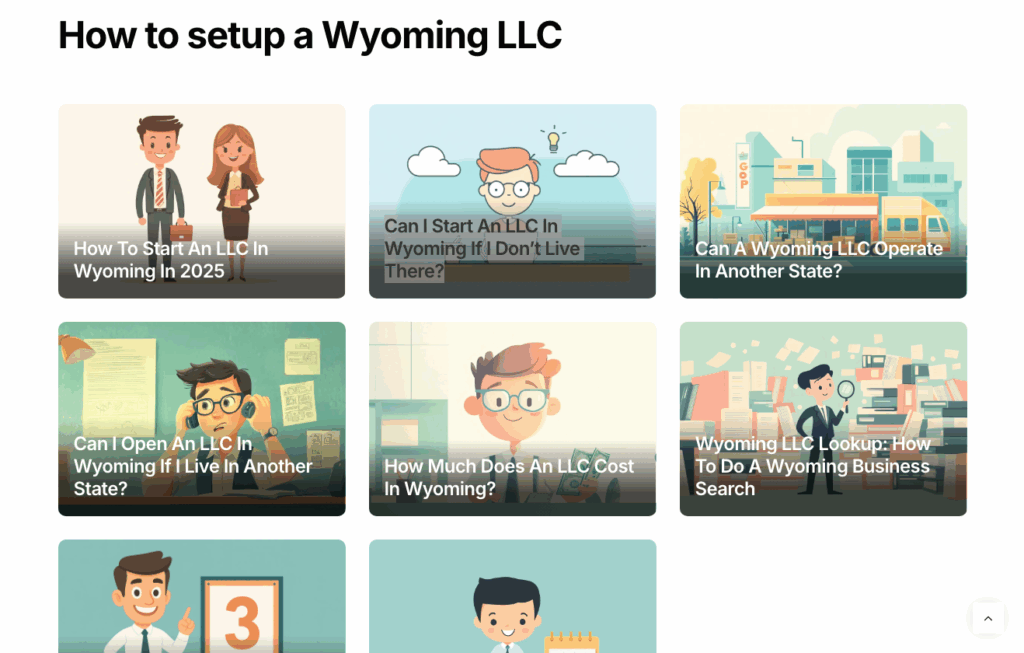
Source: startinwyoming.com
For schools, platforms, and other businesses operating in the education industry, a similar approach can be equally effective.
Use blog posts to address your target audience’s common concerns, such as scheduling, accreditation, knowledge acquisition, career ROI, and others.
And don’t forget to implement search engine optimization, as this type of content can be just as effective at attracting new leads as it can be at turning existing prospects into customers.
Make Your Product the Hero of Your Social Content
An in-depth understanding is a crucial factor in determining people’s buying behavior. In fact, several scientific studies have found a direct link between product knowledge and purchase intention.
That’s why investing in product-centered content for your social network profiles could be an excellent method for boosting conversions.
If you look at how B2B brands plan their content calendars, you’ll see that they don’t simply limit themselves to educational content, value propositions, or social proof. Instead, many of these brands regularly showcase their offer in action, aiming to provide followers a risk-free opportunity to experience the solutions and services they’re considering buying.
For instance, check out Business for Sale on Facebook. This brand regularly showcases available businesses on the platform, knowing that it’s a surefire way to call followers’ attention to the value they could unlock by using the brand’s services. More importantly, social media has a far bigger reach than website content, leading to elevated awareness, understanding, and lead acquisition while still offering genuine value to people actively looking to buy a business.
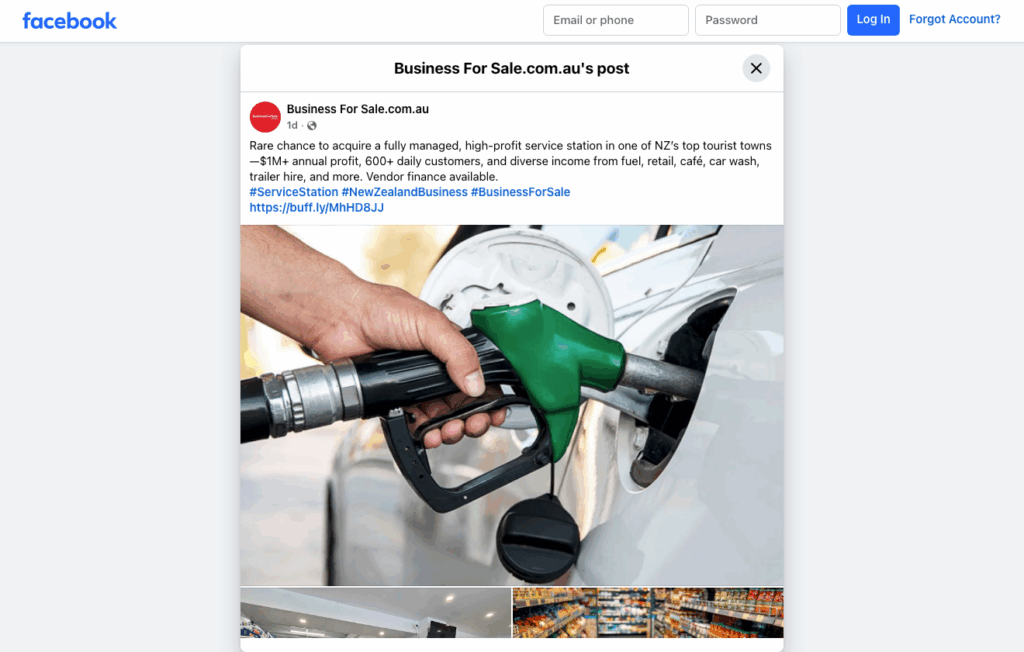
Source: facebook.com
In the education industry, you can use the same type of approach to content creation when developing your social media calendar.
By using your social channel to highlight features, provide course walkthroughs, share behind-the-scenes content, or celebrate student wins that relate to specific services, you can make it easier for your prospective clients to see the concrete benefits your offer includes — not just your mission and values.
Use Product Demos as a Lead Generator
Finally, if you’re looking for B2B digital marketing tactics you can adopt for your school or education platform’s strategy, don’t forget about risk-free product demos as a potential way to generate leads and convert customers.
Most B2B businesses offer product demos, personalized walkthroughs, and free trials as a method to capture new leads.
The approach works because it is a low-risk opportunity for prospects to receive first-hand experience with a potential solution/service provider. Additionally, it helps potential customers evaluate the ROI they stand to make if they decide to convert, without forcing them to make a buying decision before they’re ready.
However, what most marketers fail to understand is that this approach offers additional conversion-boosting benefits — even when a sign-up doesn’t instantly lead to a purchase.
Product demos work as an exceptional lead-generation mechanism, which allows you to capture leads, segment them, and then tactically nurture them into bottom-of-the-funnel prospects through a variety of personalized marketing campaigns.
Drip, for instance, offers potential customers an opportunity to receive a personalized product demo that serves as a product evaluation and an onboarding tool. All it takes is providing an email address and one basic piece of information about the potential clients’ email list.
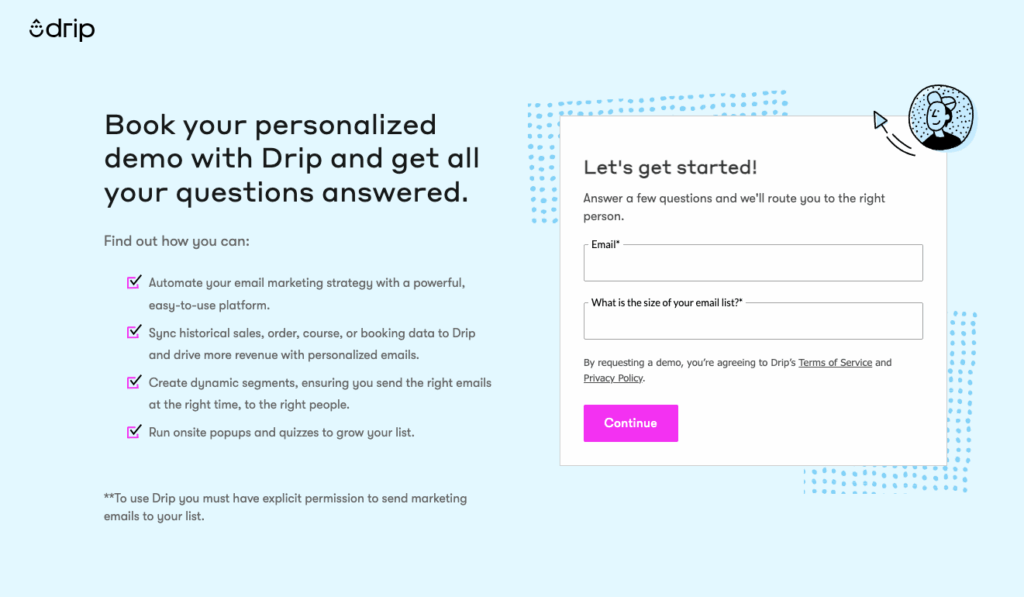
Source: drip.com
In edtech (or simply when marketing your service in the education industry), these types of resources can be just as effective as for B2B. They offer value and first-hand experience in return for future engagement.
You can create virtual classroom walkthroughs to help potential customers see your product. You can use these demos to describe the ROI you offer to teachers or administrators. And you can even turn these demos into interactive learning opportunities that allow your prospects to ask further questions to remove their conversion obstacles.
Final Thoughts
Regardless of the type of product or service you offer, learning from other brands’ marketing tactics is always a good course of action. And you don’t even have to confine yourself to your niche. In fact, expanding your horizons introduces new sources of inspiration, novel ideas, and innovative tactics into any of your digital strategies.
So, if you currently operate in the online education industry, don’t hesitate to learn from B2B brands. Many of them are doing amazing things, providing plenty of options for marketing tactics that could work just as well for your organization.


 (3 votes, average: 3.33 out of 5)
 Loading...