

For agencies managing large volumes of information, transforming curated content into high-value newsletters has become a powerful service offering. In this interview, one of our clients explains how they use Scoop.it to collect, organize, and distribute strategic content through thematic newsletters delivered directly to their clients. From content monitoring to newsletter production, they share how Scoop.it helps streamline their workflow and create value through curated intelligence.
Could you tell me about the company and your role within it?
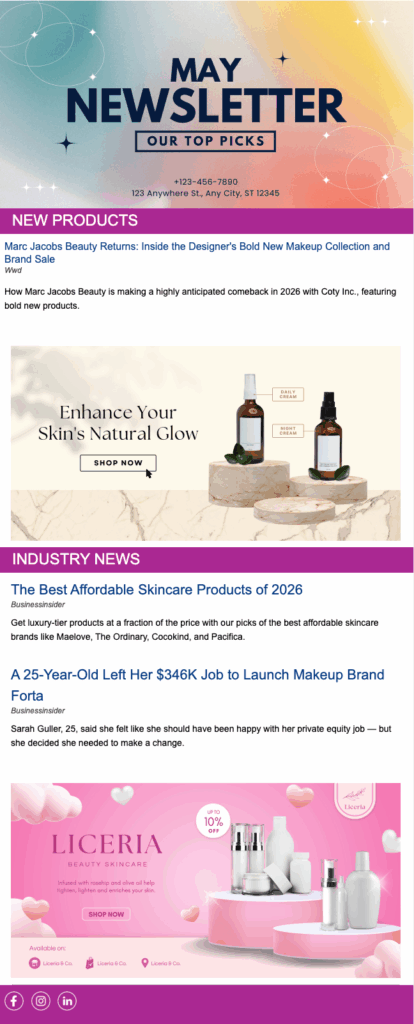
I serve as the Director of Publishing in our department, where a significant portion of our work involves creating newsletters for external clients. Most of these newsletters focus on information sharing, with content that includes both curated articles and internal messaging from our clients.
Our editors manage approximately 70 curated topics, and Scoop.it makes it easy to keep everything organized at this scale. We use it to create and store our core newsletter templates, and we scoop articles daily—primarily using the bookmarklet. Each newsletter is built directly within Scoop.it.
How did you discover Scoop.it?
We first discovered Scoop.it in 2019 when several clients began asking about newsletter services, which we were not offering at the time. As we explored ways to meet this demand, we became interested in aggregation tools. Ultimately, we built our department around the capabilities of Scoop.it, which allowed us to provide a service our clients were actively requesting. Today, we use Scoop.it continuously throughout the day, and it has become an essential part of our workflow.
What do you enjoy about Scoop.it?
One of the main advantages is that it offers much more than a simple link-saving tool. It automatically pulls in headlines, text previews, and images, which we can then customize as needed. When it comes time to build a newsletter, everything is already prepared—you simply drag and drop the articles, which makes the process incredibly straightforward.
Another benefit is the ease of collaboration with clients. Because our clients are external partners, they can log in, add their own articles, or tag curated content they would like included. This greatly streamlines the process of collecting and sharing content.
We also appreciate how responsive the Scoop.it team has been over the years. They genuinely listen to feedback, and their customer service has been excellent.
How are you organized for content curation and newsletter creation?
Our process depends largely on our publishing schedule and which newsletters are due. We begin by gathering content through RSS feeds, general online searches, partner submissions, and internal materials. If partners publish content on their websites, we can easily scoop and add it as well.
We compile the content needed for each client on a given day by scooping it directly into their topic—our topics essentially correspond to our clients. Once articles are ready, we notify clients so they can review them. They log in, select the pieces they want included, and we then assemble the newsletter. We export a proof link for their approval before sending it out. Overall, the process is highly streamlined and collaborative, making external communication about specific newsletters very efficient.
On average, how many newsletters do you send each month?
On average, we send about 160 newsletters per month. Some are monthly, others are bi-monthly, and a few are daily. Typically, one or two team members handle newsletters for specific clients, which helps them become familiar with each client’s preferences, topics, and keywords.
What is your favorite feature in Scoop.it?
My favorite feature is the bookmarklet tool. It’s hard to imagine building newsletters without it because it makes capturing content incredibly simple while allowing immediate adjustments. Since many partners and clients have their own style guides, being able to modify content at the moment of capture—and save it that way—means it’s ready to use when it’s time to build the newsletter.
Have you noticed any measurable impacts since you started using Scoop.it?
Our department would not be where it is today without Scoop.it. Before adopting it, we didn’t have the capability to offer curated newsletters in the way we envisioned.
In terms of measurable impact, the platform essentially enabled the creation and growth of the entire department. We started with just two people, and we now have seven editors. We expect the department to continue expanding alongside new client projects.
In a few words, what has been your experience with Scoop.it?
Scoop.it provides a user-friendly way for our team to curate content as part of our daily workflow, both internally and with external partners. With around 70 curated topics, it helps us stay organized and manage our newsletter templates efficiently.
It goes beyond simple link saving by pulling in headlines, previews, and images that we can customize, ensuring articles are ready to go when we build newsletters. Overall, it has become an integral part of how we work.
Do you have any advice for a person or company considering Scoop.it for the first time?
I would encourage them to dive right in. The platform is very user-friendly, easy to learn, and straightforward to use on a daily basis. When we onboard new editors, there is a lot for them to learn, but Scoop.it is not the challenging part.
I would also emphasize how effective it is for both internal and external collaboration. It streamlines processes that would otherwise involve a great deal of back-and-forth communication and scattered links, making it truly essential to our operations.



 (5 votes, average: 3.80 out of 5)
 Loading...